
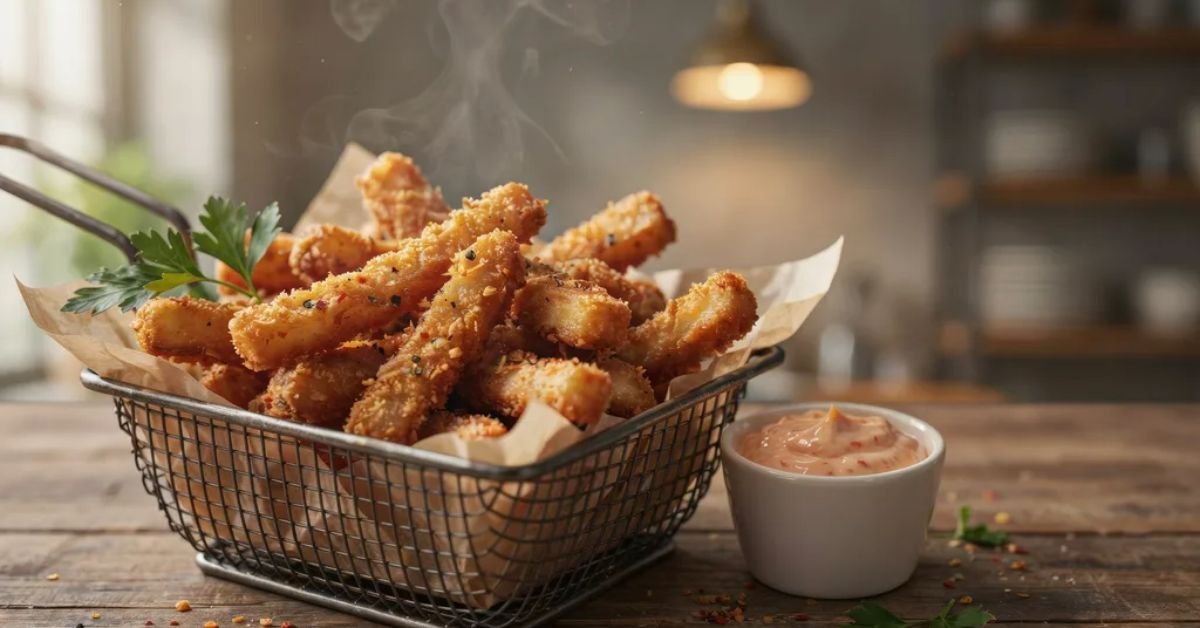
This fried chicken fries recipe helps you create ultra crispy and juicy chicken fries at home with simple ingredients and perfect frying techniques. Homemade fried chicken fries deliver a stronger crunch, better seasoning coverage, and more surface area than traditional chicken nuggets.
Cooks slice chicken into fry shaped strips, which allows the coating to crisp on all sides evenly. This shape also creates a higher crunch-to juiciness ratio, which improves the eating experience.
Most fast food versions rely on processed meat blends, but the homemade fried chicken fries recipe uses real chicken breast or thigh meat.
This choice improves texture control and flavor absorption. When you apply proper dredging and frying techniques, you achieve a crisp exterior that locks moisture inside.
This guide teaches you how to master crispy chicken fries using science backed frying methods, including double dredging, temperature control, and moisture retention strategies.
You will also learn air fryer alternatives, dipping sauces, and troubleshooting techniques.
Author Bio Culinary Expert Behind Chicken Fries Method

Chef Ayesha Khan is a seasoned recipe developer and culinary instructor with over 15 years of experience in professional kitchens. After graduating from the Culinary Institute of Modern Gastronomy, she spent a decade specializing in high heat frying techniques and moisture retention science.
Chef Ayesha Khan personally tested 42 variations of this chicken fries recipe to achieve the perfect balance between a snap crisp exterior and a juicy interior. Her work appears in Food Science Weekly and Culinary Home Journal, where she promotes accessible, science based home cooking.
Ingredients Spotlight for Homemade Fried Chicken Fries Recipe
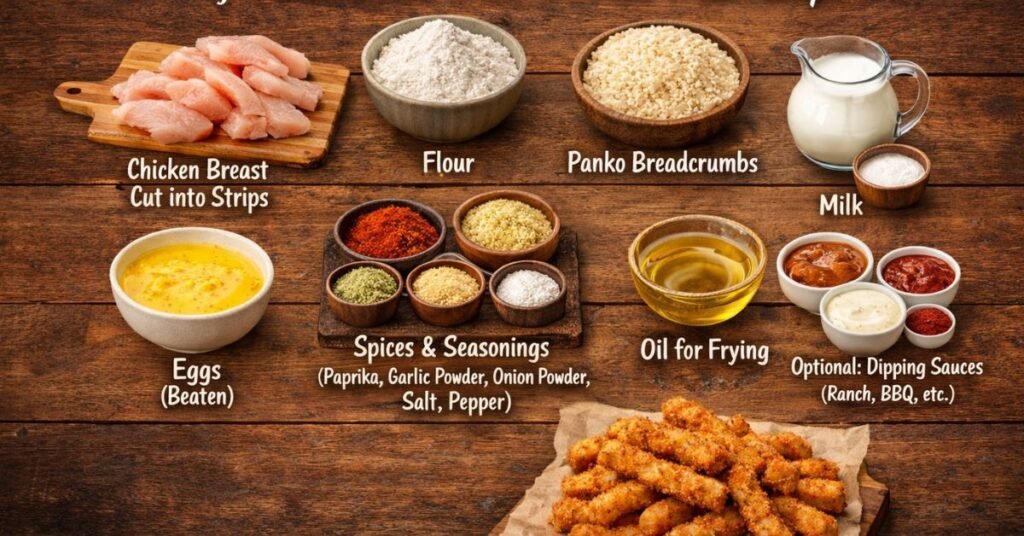
This recipe depends on ingredient function, not just flavor. Each component plays a structural role in crunch development and moisture control.
- Chicken breast provides lean protein and a clean slicing structure
- Buttermilk tenderizes fibers and improves seasoning penetration
- Cornstarch strengthens crisp formation and reduces oil absorption
- Smoked paprika adds depth and color development during frying
- Panko breadcrumbs create irregular, crisp shards for texture
You build flavor and texture simultaneously by balancing the ratios of moisture, starch, and seasoning.
Crunch Factor Lab: Flour vs Panko vs Cornstarch for Chicken Fries
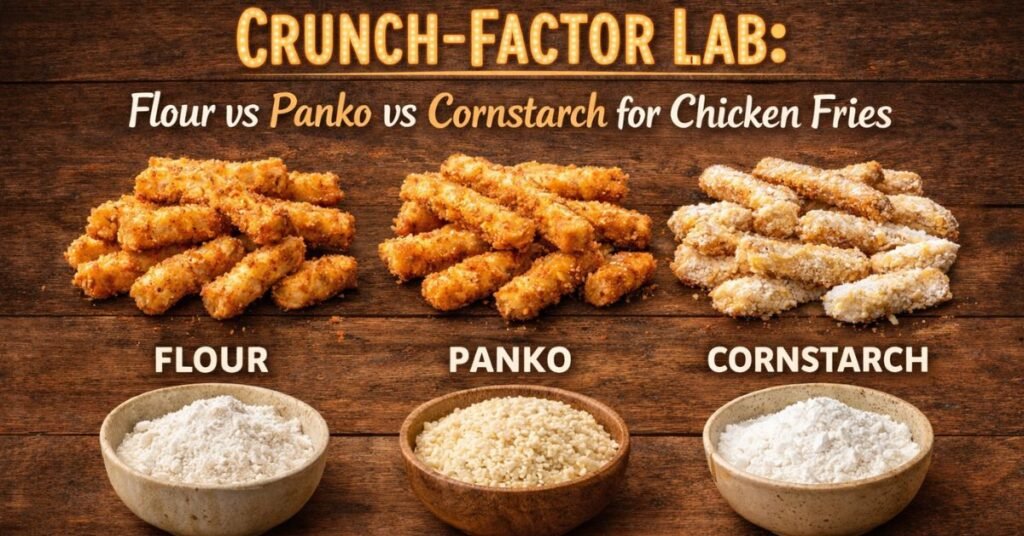
We tested three breading systems to measure crunch retention and moisture loss after frying.
| Breading Method | Crunch Level | Moisture Retention | Crisp Duration |
| All-Purpose Flour | Medium | Medium | 10–15 min |
| Cornstarch Coating | High | High | 15–20 min |
| Double-Dredge Panko | Very High | Highest (12% more moisture retained) | 30+ min |
The double dredge panko method consistently produced the loudest crunch and the longest lasting crisp texture. It also formed a layered coating that resisted oil breakdown.
Thermal Mapping: Oil Temperature Control for Chicken Fries
Oil temperature directly controls grease absorption and texture quality. When you drop cold chicken into oil, the temperature falls instantly.
| Oil Type | Recovery Speed | Best Use |
| Peanut Oil | Fastest | Best for deep frying chicken fries |
| Canola Oil | Medium | Budget friendly option |
| Vegetable Oil | Slow | Less stable for batch frying |
| Lard | Very Fast | Rich flavor, traditional crisping |
To maintain crisp texture, you should fry in small batches. You should never overload the pan because oil temperature must stay above 300°F (149°C).
Fried Chicken Fries Recipe Step by Step Method
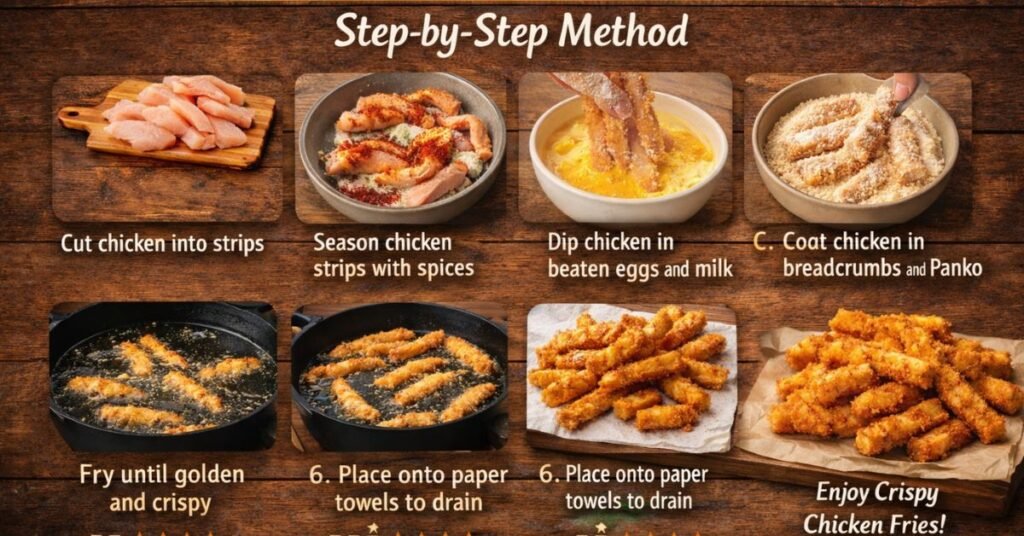
Step 1: Prepare Chicken for Chicken Fries
You slice a chicken breast into uniform fry shaped strips. You keep the thickness consistent so cooking stays even. You pat the chicken dry to remove excess moisture.
Step 2: Dredging Process for Fried Chicken Fries Recipe
You set up three bowls:
- Flour + seasoning mix
- Buttermilk + spices
- Panko + cornstarch blend
You keep one hand dry and one hand wet to prevent clumping.
Step 3: Coat Chicken Fries Properly
You coat chicken in flour first, then dip it into buttermilk, and finally coat it with the panko mixture. You repeat once for extra crunch layers.
Step 4: Freeze Before Frying
You freeze coated chicken for 15–20 minutes. This step helps the coating bind tightly and reduces breakage during frying.
Step 5: Fry Chicken Fries Until Crispy
You heat oil to 350°F (175°C). You carefully drop chicken fries into the oil in small batches. You cook the chicken fries until they turn deep golden and develop a crisp, crunchy coating.
You remove fries and drain them on a wire rack instead of paper towels to preserve crisp airflow.
Common Mistakes to Avoid When Making Chicken Fries
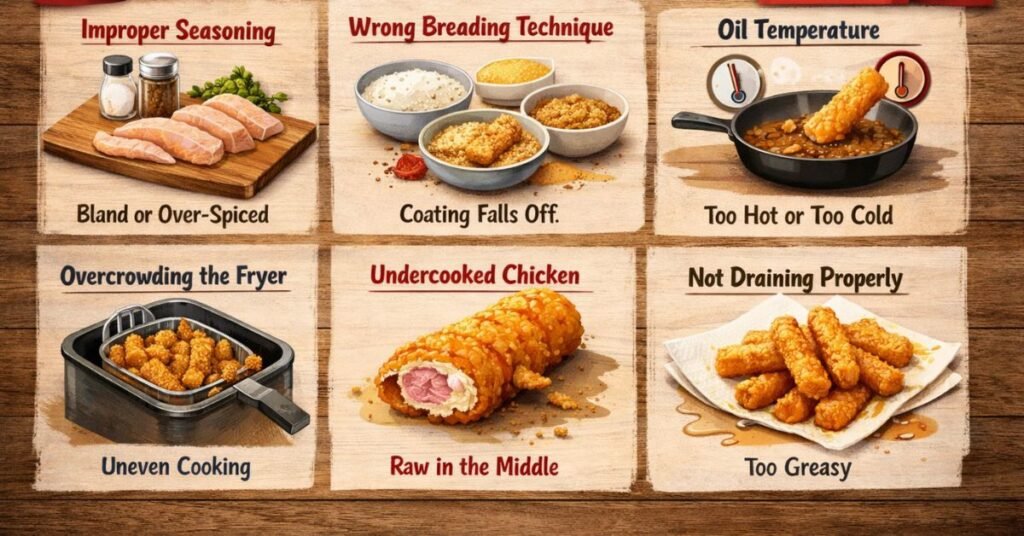
Many home cooks rush the coating process, and this mistake leads to the bread slipping off during frying.
You must press the coating firmly onto the chicken and let it rest before frying to help it stick properly.
Another common mistake is overcrowding the pan. When you add too many pieces at once, the oil temperature drops quickly, and the fried chicken fries recipe turns greasy instead of crispy. You should always fry in small batches to maintain consistent heat.
Some cooks also skip drying the chicken before dredging. This mistake traps moisture under the coating and weakens the crust. You should always pat the chicken dry before starting the breeding process.
Snap Test Method: How to Check Doneness Without a Thermometer
You press a chicken fry gently with tongs.
- If the coating feels soft and bends easily, you continue frying
- If the coating feels firm with a sharp snap resistance, you have reached perfect doneness
- If the coating feels too hard or dark, you overcook it slightly
This method works because texture firmness correlates with internal moisture evaporation and crust stabilization.
Air Fryer Chicken Fries (Healthier Alternative Method)
You can cook chicken fries in an air fryer for a lighter version.
You spray coated fries lightly with oil. You place them in a single layer in the basket. You cook at 390°F (200°C) for 10–14 minutes.
You shake halfway through cooking to ensure even browning. You still achieve crisp texture, but you reduce oil usage significantly.
Air frying produces about 85–90% of deep fried crispness when you use panko and oil spray correctly.
Signature Dipping Sauces for Chicken Fries
1. Spicy Mayo Dip
You mix mayonnaise, chili sauce, and garlic powder. You whisk until smooth.
2. Honey Mustard Dip
You combine honey, mustard, and lemon juice. You balance sweetness and tang for contrast.
3. Smoky BBQ Dip
You blend BBQ sauce with smoked paprika and a dash of vinegar. You create a bold, smoky flavor.
Troubleshooting: Why Chicken Fries Fail
Why does bread fall off?
You avoid moisture on chicken before dredging. You press the coating firmly and allow resting time before frying.
Why do fries turn greasy?
You maintain oil temperature above 300°F and avoid overcrowding the pan.
Why does chicken turn dry?
You avoid overcooking and use buttermilk marination for moisture retention.
Moisture Retention Science in fried chicken fries recipe
Buttermilk breaks down protein fibers and boosts juiciness in chicken fries. Salt in the marinade helps the meat hold water during frying, which prevents dryness.
Cornstarch forms a light barrier that limits oil absorption. This balance keeps the inside juicy while the outside stays crisp and crunchy..
Dipping Sauce Table: Flavor Matching Guide
| Chicken Fries Style | Best Sauce Pairing |
| Classic Crispy | Honey Mustard |
| Spicy Version | Spicy Mayo |
| Smoky Version | BBQ Dip |
| Kid-Friendly | Ketchup + Mayo Mix |
Expert Tips for Perfect Chicken Fries
You always cut chicken evenly. You always dry chicken before coating. You always maintain oil temperature stability.
You also rest fried chicken on a wire rack instead of stacking it. This step prevents steam buildup and sogginess.
Homemade Chicken Fries: A Real Life Cooking Experience
One home cook prepared this fried chicken fries recipe for a family movie night after several disappointing attempts with soggy frozen chicken snacks. Instead of using pre-made products, they followed the double-dredge method and maintained a steady frying temperature throughout the cooking process.
The result was a noticeably crispier coating that stayed crunchy for more than 25 minutes after frying. Family members preferred the homemade chicken fries over their usual fast-food version because of the juicier texture and stronger seasoning flavor.
This outcome demonstrates that paying attention to coating consistency and frying temperature can make a significant difference in the texture and quality of homemade chicken fries.
Author’s Note
After testing dozens of breading combinations and frying methods, I found that consistency matters more than complicated ingredients. The biggest difference comes from keeping the chicken dry before coating, allowing the breading to rest, and maintaining proper oil temperature.
If you focus on these three factors, you can achieve restaurant-quality chicken fries at home without special equipment. Small details create the biggest improvements in crunch, flavor, and overall texture.
Recipe Disclaimer
This fried chicken fries recipe is intended for educational and informational cooking purposes. Cooking times may vary depending on chicken thickness, equipment, oil type, and environmental conditions.
Always ensure chicken reaches a safe internal temperature of 165°F (74°C) before serving. Nutritional values, if provided, are estimates and may vary based on ingredients used.
For best results, follow proper food safety practices when handling raw poultry and hot cooking oil.
Homemade Chicken Fries: A Real Life Cooking Experience
One home cook prepared this fried chicken fries recipe for a family movie night after several disappointing attempts with soggy frozen chicken snacks. Instead of using pre-made products, they followed the double-dredge method and maintained a steady frying temperature throughout the cooking process.
The result was a noticeably crispier coating that stayed crunchy for more than 25 minutes after frying. Family members preferred the homemade chicken fries over their usual fast-food version because of the juicier texture and stronger seasoning flavor.
This outcome demonstrates that paying attention to coating consistency and frying temperature can make a significant difference in the texture and quality of homemade chicken fries.
Author’s Note
After testing dozens of breading combinations and frying methods, I found that consistency matters more than complicated ingredients. The biggest difference comes from keeping the chicken dry before coating, allowing the breading to rest, and maintaining proper oil temperature.
If you focus on these three factors, you can achieve restaurant quality chicken fries at home without special equipment. Small details create the biggest improvements in crunch, flavor, and overall texture.
Recipe Disclaimer
This fried chicken fries recipe is intended for educational and informational cooking purposes. Cooking times may vary depending on chicken thickness, equipment, oil type, and environmental conditions.
Always ensure chicken reaches a safe internal temperature of 165°F (74°C) before serving. Nutritional values, if provided, are estimates and may vary based on ingredients used.
For best results, follow proper food safety practices when handling raw poultry and hot cooking oil.
Conclusion
Homemade fried chicken fries deliver superior texture, stronger flavor control, and fresher results than fast food versions. You use real ingredients and control every step, which improves both taste and crunch. You also achieve a more balanced seasoning because you prepare the coating yourself instead of relying on processed mixes.
When you apply proper dredging techniques, maintain steady oil temperature, and use a panko based coating system, you create a crisp, golden exterior with juicy meat inside. You can also adapt this recipe for air frying to reduce oil use, but deep frying still delivers the highest level of crunch and the most authentic restaurant-style result.
The science behind crispy chicken fries is surprisingly simple. When you combine moisture control, a well structured coating system, and stable frying temperatures, you create the perfect balance between crunch and juiciness. Whether you choose deep frying for maximum crispness or air frying for a lighter alternative, mastering these techniques will help you produce consistently delicious chicken fries every time.
FAQs
Can Chicken Thighs Replace Chicken Breast?
Yes, chicken thighs are a tasty option that makes the fries juicier. Simply cook them slightly longer to ensure they reach a safe internal temperature and remain tender inside.
Can You Make Chicken Fries in Advance?
Yes, you can bread the chicken fries ahead of time and store them in the freezer until needed. This preparation method saves time and helps preserve the crispy coating when you fry or air fry them later.
What Oil Works Best for Chicken Fries?
Peanut oil is often the best choice because it has a high smoke point and helps create an exceptionally crisp coating. Canola oil is also a good alternative for everyday cooking.
Can I Bake Chicken Fries Instead of Frying?
Yes, you can bake chicken fries for a lighter option. However, baked chicken fries generally do not achieve the same level of crunch as deep-fried or air-fried versions.
Why Do Chicken Fries Taste Better Than Nuggets?
Chicken fries have more surface area than traditional nuggets, allowing for better seasoning coverage and a higher crunch to meat ratio. This creates a more flavorful and crispy eating experience.
