
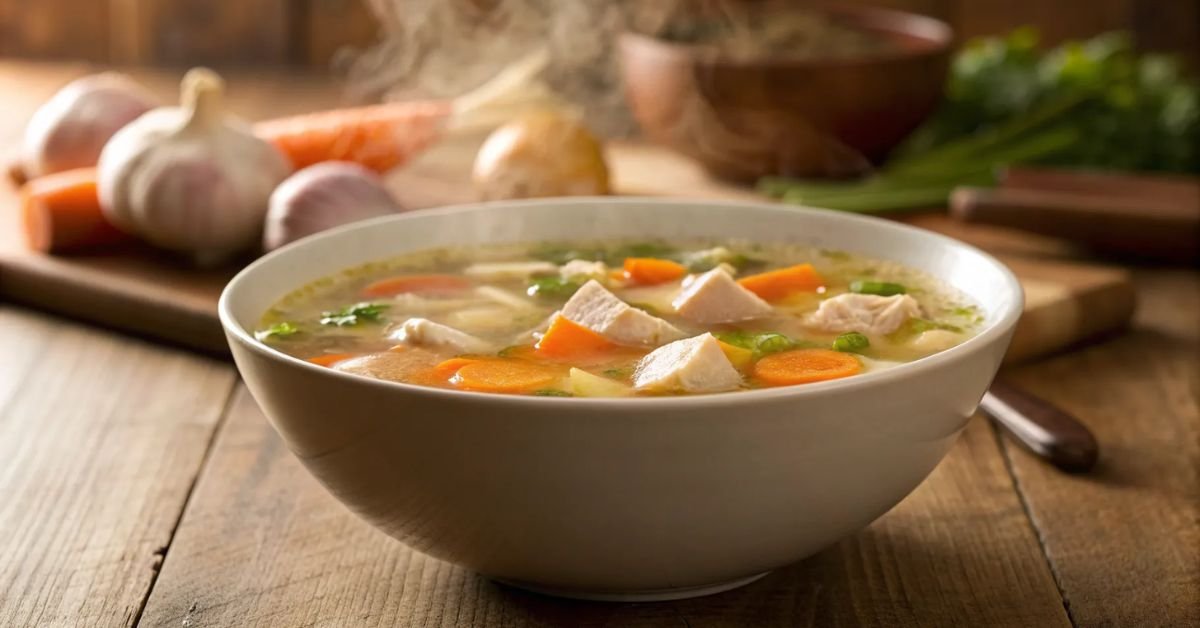
Chicken stock recipe is an essential kitchen staple that provides a rich, savory base for soups, sauces, stews, and rice dishes. Preparing chicken stock at home ensures fresher flavor, natural richness, and complete control over ingredients, without any preservatives or artificial additives.
This complete guide walks you through a classic chicken stock recipe using simple steps and expert techniques. Whether you prefer a slow-simmered traditional method or a quicker modern approach, you’ll learn how to make perfectly golden, flavorful stock every time.
What Is Chicken Stock and Why It’s a Kitchen Essential
Chicken stock is a flavorful liquid made by gently simmering chicken bones, vegetables, herbs, and aromatics in water over a long period of time. As the bones cook, they release collagen, minerals, and deep savory taste into the liquid, creating a rich base that becomes the backbone of countless recipes.
A well made stock is much more than just broth. It provides depth, warmth, and complexity that cannot be replicated by simply adding seasoning later. That is why professional chefs always keep stock ready in their kitchens because it transforms ordinary cooking into something special.
When you prepare a homemade chicken stock recipe, you are creating a foundation ingredient that makes every dish taste more complete and comforting.
Why Chicken Stock Is So Valuable
Homemade chicken stock is considered a kitchen essential because it supports cooking in many ways:
- It adds deep flavor to soups, stews, and noodles
- It creates rich sauces without needing heavy cream
- It improves grains like rice, quinoa, and risotto
- It helps make gravies smoother and more savory
- It reduces food waste by using leftover chicken bones
Extra Benefits Many People Don’t Realize
Beyond taste, chicken stock also offers practical and nutritional advantages:
- It is naturally high in collagen when made from bones
- It can be frozen for months for meal prep convenience
- It is much cheaper than buying cartons weekly
- It allows full control over salt and ingredients
Once you get comfortable making stock at home, it becomes one of the most rewarding habits in cooking.
Chicken Stock vs Chicken Broth (Key Differences Explained)

Many home cooks use the words stock and broth interchangeably, but they are actually different in both preparation and purpose. Understanding this difference helps you choose the right base for your recipes and ensures better results in cooking.
Chicken stock is primarily made from bones, while chicken broth is usually made from meat. Because bones contain collagen, stock becomes richer, thicker, and more flavorful when simmered properly.
If your goal is a strong and traditional chicken stock recipe, bones are the key ingredient.
Taste Differences
Stock has a deeper, more roasted and savory taste because bones release minerals and gelatin during long cooking. Broth tends to be lighter and more delicate, often meant for sipping or quick soups.
Texture Differences
One of the easiest ways to tell stock apart is texture:
- Stock often becomes jelly like when chilled
- Broth stays thin and watery
That gelatin texture is a sign of a high quality stock.
Best Uses for Each
Both stock and broth are useful, but they shine in different ways:
Chicken stock is best for:
- Gravies and reductions
- Risottos and rice dishes
- Rich soups and stews
- Sauce bases
Chicken broth is best for:
- Light soups
- Drinking as a warm beverage
- Quick cooking when you need mild flavor
Quick Summary Table
- Stock = bones + long simmer = rich and gelatinous
- Broth = meat + shorter simmer = lighter and thinner
Learning this difference is the first step toward mastering a perfect homemade chicken stock recipe.
Why Making Chicken Stock at Home Is Always Worth It

Making chicken stock at home may feel like an extra step, but it is one of the most rewarding kitchen skills you can develop. While store bought stock is convenient, it often lacks the deep flavor and richness that homemade stock naturally provides. When you make it yourself, you control every ingredient, ensuring the stock is clean, fresh, and perfectly suited to your cooking style.
A homemade chicken stock recipe is also a smart way to stretch your groceries. Instead of throwing away leftover bones from a roast chicken, you can turn them into something incredibly valuable that enhances meals for weeks.
Top Reasons Homemade Stock Is Better
Homemade chicken stock stands out because it offers benefits that packaged versions cannot match:
- More flavor: Slow simmering extracts deep savory taste from bones
- No additives: No preservatives, artificial flavors, or excess sodium
- Budget-friendly: Uses scraps and leftovers instead of wasting food
- Customizable: Adjust herbs, aromatics, and strength to your needs
- Restaurant-quality results: Adds professional depth to home cooking
Extra Advantages Many People Overlook
Beyond taste, homemade stock improves your kitchen routine:
- Freezes beautifully for meal prep
- Helps you cook faster on busy nights
- Makes simple recipes taste richer without extra effort
- Supports healthier eating with clean ingredients
Once you experience the difference, you’ll realize a homemade chicken stock recipe is not just cooking it’s an upgrade to everything you make.
What Makes a Truly Great Chicken Stock?

A truly great chicken stock is not just about boiling bones in water. The best stock has a golden color, a deep aroma, and a rich body that feels silky on the tongue. It should taste clean and balanced, with chicken flavor leading the way, supported gently by herbs and vegetables.
What separates an average stock from an exceptional one is attention to technique. Small details like the type of bones used, the cooking temperature, and even how you strain it can dramatically improve the final result.A high quality chicken stock recipe should deliver flavor that makes soups comforting, sauces luxurious, and everyday meals unforgettable.
Key Qualities of Excellent Chicken Stock
A perfect stock has these important characteristics:
- Rich chicken flavor without tasting greasy
- Clear or golden appearance (not cloudy or muddy)
- Gelatinous texture when chilled, showing collagen extraction
- Balanced aromatics, never overpowering the chicken
- Versatility, meaning it works in many recipes
Signs Your Stock Turned Out Perfectly
If you want to know whether you nailed it, look for these signs:
- It smells savory and fresh, not overly vegetable heavy
- It has a deep golden color
- It sets slightly like jelly in the fridge
- It tastes strong enough to sip on its own
These are the same qualities chefs aim for when making a professional chicken stock recipe in restaurant kitchens.
The Core Building Blocks of a Perfect Chicken Stock

Every great stock is built on a few simple foundations. Once you understand these building blocks, you can make stock confidently every time, whether you want a light delicate base or a bold, rich flavor for stews.
The magic comes from combining bones, aromatics, and the right cooking method. Let’s break down each essential element.
Choosing the Best Bones and Chicken Parts
Bones are the most important ingredient in stock making because they provide collagen, minerals, and that deep savory flavor that makes stock so valuable. The best stocks are made using a variety of bones rather than just one type, because each part contributes something different.
For example, wings and feet contain high collagen, while carcasses provide roasted flavor and structure. Adding a small amount of meat can enhance taste, but bones should always be the focus.
A strong homemade chicken stock recipe begins with the right bone selection.
Best bones and parts to use include:
- Chicken backs and necks
- Wings (excellent for gelatin rich stock)
- Leftover roasted chicken carcasses
- Drumstick bones with a little meat attached
- Chicken feet (optional but extremely collagen rich)
Bones to avoid:
- Only boneless chicken breast (too lean, weak flavor)
- Heavily seasoned or spicy leftovers (can overpower stock)
Using a bone-rich mix ensures your stock turns out flavorful, thick, and satisfying.
Aromatics, Herbs, and Vegetables That Add Depth
Aromatics are what give chicken stock its comforting fragrance and complexity. While bones create richness, vegetables and herbs provide balance and subtle sweetness. The classic combination is onion, carrot, and celery often called a mirepoix.
However, the key is moderation. Too many vegetables can make the stock taste like vegetable soup instead of pure chicken stock. Herbs should support the flavor, not dominate it.
A well balanced chicken stock recipe should smell inviting, savory, and clean.
Best aromatics to include:
- Onion (adds sweetness and depth)
- Carrots (gentle natural sweetness)
- Celery (fresh savory backbone)
- Garlic cloves (optional for extra warmth)
Herbs and seasonings that work beautifully:
- Bay leaves
- Fresh thyme
- Parsley stems
- Whole peppercorns
Avoid adding:
- Broccoli, cabbage, or strong greens (can turn bitter)
- Too many spices (stock should stay neutral)
The goal is a stock that enhances every recipe, not one that tastes overly flavored on its own.
Brown Stock vs White Stock (Which One Should You Make?)
One unique way to elevate your stock is choosing between brown stock and white stock. These are two classic styles used in professional cooking, and each has a different purpose.
White stock is made by simmering raw bones gently, producing a light colored stock with a clean flavor. Brown stock is made by roasting the bones first, creating a darker, deeper stock with richer taste.
Both are excellent, and the best choice depends on what you plan to cook.
A flexible chicken stock recipe can be adapted into either style.
White stock is best for:
- Light soups
- Risottos
- Delicate sauces
Brown stock is best for:
- Gravies
- Stews and braises
- Deep flavored reductions
Quick tip:
- Roast bones at 400°F (200°C) for 30–40 minutes for brown stock flavor
Learning this difference instantly makes your stock more professional and gives you more control in the kitchen.
Chicken Stock Making Science (Secrets Most Recipes Skip)

Most people think stock is simply bones boiled in water, but the truth is that great stock is all about technique. Professional chefs treat stock making like a science because small choices directly affect the final flavor, clarity, and texture.
This is where many online recipes fall short they give ingredients but skip the deeper secrets that make stock truly exceptional. When you understand the science behind simmering, skimming, and ratios, your homemade stock becomes richer, cleaner, and more consistent every time.
A truly superior chicken stock recipe is built not only on ingredients, but also on smart cooking methods.
Why Technique Matters So Much
The cooking process controls:
- How much collagen is extracted from bones
- Whether the stock turns cloudy or clear
- How strong the chicken flavor becomes
- Whether bitterness develops from overcooking vegetables
- The final richness and mouthfeel
Once you master these small details, your stock will taste like something from a high end kitchen.
Skimming Foam Does It Matter?
When you first start simmering chicken bones, you’ll notice a layer of grayish foam rising to the surface. This foam is made of impurities, coagulated proteins, and tiny particles released from the bones and meat.
Skimming is not just for appearance it improves the overall quality of your stock. While it’s not absolutely required, it is one of the easiest ways to make your stock taste cleaner and look more professional.
In a classic chicken stock recipe, skimming during the first 30–45 minutes is a chef level habit that makes a real difference.
Benefits of skimming foam:
- Creates a clearer, more golden stock
- Prevents slightly bitter or muddy flavors
- Removes excess impurities early
- Gives a cleaner finished broth for soups and sauces
Best skimming tips:
- Use a spoon or fine mesh skimmer
- Skim gently without stirring too much
- Focus mainly on the first hour of simmering
Skipping foam won’t ruin your stock, but skimming helps you achieve that restaurant quality finish.
Ideal Water to Bones Ratio and Cooking Time
One of the most overlooked secrets in stock making is balance. If you use too much water, your stock will taste weak. If you use too little, it may become overly concentrated or salty once reduced.
The perfect stock depends on having enough bones to create strength, while keeping the liquid level just right.
A properly balanced chicken stock recipe always starts with the correct ratio.
Ideal bone to water guideline:
- 2 to 3 pounds of chicken bones
- 3 to 4 quarts (liters) of cold water
This creates a stock that is rich but not overpowering.
Cooking Time Matters Too
Stock improves with slow cooking, but more is not always better.
Recommended simmer times:
- Stovetop: 4 to 6 hours for deep flavor
- Instant Pot: 2 hours under pressure
- Too long (8+ hours): vegetables can break down and turn bitter
Best simmering rule:
- Maintain a gentle simmer instead of bringing it to a full boil.
Boiling aggressively breaks fats and particles into the liquid, causing cloudiness and a less refined taste.
Extra Pro Tip for Stronger Stock
If you want an even richer result:
- Use wings or feet for extra collagen
- Roast bones first for deeper flavor
- Reduce the finished stock slightly after straining
These small adjustments elevate your stock from basic to exceptional.
How to Make Homemade Chicken Stock Step by Step Guide

Now that you understand the foundations and science behind stock making, it’s time to actually prepare it. The process is surprisingly simple, but the results feel luxurious. Homemade stock brings a comforting warmth, deep flavor, and richness to every dish you prepare.
The beauty of a traditional chicken stock recipe is that it doesn’t require complicated ingredients, it requires patience, gentle heat, and the right technique. Once you make it once, it becomes an easy kitchen routine that saves money and improves flavor instantly.
This step by step method is designed for beginners and experienced cooks alike.
Step 1: What This Method Will Help You Achieve
With this guide, your chicken stock will be golden and full of flavor. It will naturally be rich in collagen, giving a smooth texture. Aromatics will be perfectly balanced for a delicious taste. This stock is ideal for freezing or meal prep. Overall, it will taste far better than any store bought version.
- Golden and flavorful
- Rich in natural collagen
- Balanced with aromatics
- Perfect for freezing and meal prep
- Much better than store bought cartons
Let’s begin with the ingredients.
Step 2: Ingredients You’ll Need
The best homemade stock starts with simple, wholesome ingredients. You don’t need anything fancy, just quality bones, classic vegetables, and a few herbs.
A well made chicken stock recipe relies on a clean ingredient list so the chicken flavor stays at the center.
Core ingredients:
- Chicken bones (carcass, wings, backs, necks)
- Onion (halved, skin on is fine)
- Carrots (roughly chopped)
- Celery stalks (roughly chopped)
- Garlic cloves (optional for extra depth)
- Bay leaf
- Whole peppercorns
- Fresh herbs like thyme or parsley
- Water:
- Always use cold water to start
- Add just enough to cover the bones
- Always use cold water to start
Optional Add Ins for Extra Flavor:
- Leek tops for mild sweetness
- Mushroom stems for umami
- A touch of apple cider vinegar helps release minerals and collagen
Avoid these ingredients:
- Strong spices like curry powder
- Bitter vegetables like cabbage
- Too much salt (season later, not now)
Keeping ingredients balanced ensures your stock stays versatile for many recipes.
Tools and Equipment for Best Results
You don’t need professional kitchen gear, but having the right tools makes stock-making easier, cleaner, and safer. Good equipment helps with straining, cooling, and storing properly.
A reliable chicken stock recipe becomes much simpler when your setup is ready before you begin.
Essential tools:
- Large stockpot or Dutch oven (at least 6–8 quarts)
- Fine mesh strainer
- Large bowl or second pot for straining
- Spoon or skimmer for removing foam
- Airtight containers or freezer bags
Helpful extras for best results:
- Cheesecloth (for ultra clear stock)
- Tongs for removing large bones
- Funnel for pouring into jars
- Ice bath for quick cooling
Storage Containers Matter
For convenience, store stock in:
- Small containers for sauces
- Larger tubs for soups
- Ice cube trays for quick flavor boosts
Having stock portioned properly saves time later and prevents waste.
Full Cooking Instructions (Stovetop Method)
This is the classic method used in home kitchens and restaurants. The key is low, slow simmering, never rushing the process.
A traditional chicken stock recipe is all about gentle extraction, not boiling.
Step by step stovetop instructions:
- Add bones to the pot
Add the chicken bones and carcass to a large stockpot. - Add vegetables and aromatics
Add onion, carrots, celery, herbs, bay leaf, and peppercorns. - Cover with cold water
Pour in enough cold water to fully cover everything by about 1 inch. - Bring to a gentle simmer
Heat slowly until small bubbles appear.
Do not let it boil aggressively. - Skim foam during the first hour
Use a spoon or skimmer to remove impurities for a cleaner stock. - Simmer low and slow
Let the stock cook uncovered for 4–6 hours.
Slow cooking brings out full flavor - Strain carefully
Remove large bones first, then pour through a fine mesh strainer. - Cool quickly for safety
Place the pot in an ice bath or divide into smaller containers. - Store or freeze
Refrigerate for short term use or freeze for long term storage.
What You Should See When It’s Done
Your finished stock should be:
- Golden in color
- Deeply aromatic
- Rich but not greasy
- Slightly gelatinous when chilled
That’s how you know your homemade stock is perfect.
Instant Pot Chicken Stock Method (Fast Option)

If you’re short on time but still want rich, flavorful homemade stock, the Instant Pot is a game changer. Pressure cooking extracts collagen and flavor much faster than traditional simmering, making it possible to produce a delicious chicken stock recipe in just a fraction of the time.
This method is especially useful for busy home cooks who want professional quality stock without spending hours by the stove. While it’s faster, the result is surprisingly close to a long simmered stovetop stock.
Why Use an Instant Pot for Stock
Using an Instant Pot provides several advantages:
- Time saving: Reduces cooking time from 4–6 hours to about 2 hours
- Consistent results: Maintains a controlled cooking environment
- Enhanced flavor: Pressure cooking extracts more collagen and nutrients quickly
- Energy efficient: Less stove usage
Even though it’s fast, following a few key tips ensures your stock is rich, clear, and aromatic.
Ingredients for Instant Pot Stock
The ingredients are similar to the stovetop version, but the Instant Pot allows you to slightly modify quantities to suit faster cooking.
Core ingredients:
- 2–3 pounds of chicken bones (carcass, wings, necks)
- 1–2 carrots, roughly chopped
- 2 celery stalks, roughly chopped
- 1 onion, halved
- 2–3 garlic cloves (optional)
- 1–2 bay leaves
- 5–6 whole peppercorns
- Fresh herbs like thyme and parsley
Optional add ins for extra richness:
- Splash of apple cider vinegar (helps release minerals from bones)
- Mushroom stems (for umami)
Cold water is added to just cover the bones, usually 8–10 cups depending on your Instant Pot size.
Tools and Equipment
The right tools make Instant Pot stock easier and safer.
Essential tools:
- Instant Pot or any electric pressure cooker
- Fine mesh strainer or sieve
- Large bowl or second pot for straining
- Tongs for removing bones
- Airtight containers or freezer safe jars
Optional extras:
- Cheesecloth for ultra clear stock
- Funnel for pouring into jars
- Ice bath for rapid cooling
Proper equipment ensures your stock is both safe and high quality.
Step by Step Instant Pot Instructions
Follow these steps to make the best Instant Pot chicken stock:
- Add bones and vegetables to the pot
Place chicken bones, onion, carrot, celery, garlic, and herbs into the Instant Pot. - Add cold water
Pour enough cold water to cover ingredients by 1 inch. Do not exceed the Max Fill line. - Set to pressure cook
Use the Manual/Pressure Cook mode for 45–60 minutes on high pressure. - Natural release
Allow the pressure to release naturally for 15–20 minutes before opening the lid. - Strain carefully
Remove bones first, then pour stock through a fine mesh strainer or cheesecloth. - Cool quickly
Use an ice bath or divide into small containers for refrigeration/freezing. - Store or freeze
Refrigerate for up to 4–5 days or freeze for 3–6 months in portions.
Tips for Perfect Instant Pot Stock
- Don’t overfill the pot — pressure cooking is safest below the Max Fill line
- Skim foam if needed after opening the lid
- Reduce stock on the stove for a more concentrated flavor
- Freeze in ice cube trays for small portions and easy use
The Instant Pot method is fast, convenient, and still produces a deeply flavorful chicken stock recipe comparable to traditional methods.
Expert Tips for the Best Flavorful Stock Every Time

Even after following all the steps, a few expert tricks can take your chicken stock recipe from good to extraordinary. These tips come from professional chefs and seasoned home cooks who understand the nuances that create depth, richness, and clarity in every batch of stock.
Small adjustments, timing, and attention to detail can significantly improve flavor and texture. Here’s how to make sure every pot you make is deeply satisfying and versatile for all your dishes.
Roasting Bones for Extra Depth
One of the simplest ways to enhance stock flavor is roasting the bones before simmering. Roasting caramelizes natural sugars and develops a deeper, nuttier taste that is impossible to achieve with raw bones alone.
How to roast bones properly:
- Preheat oven to 400°F (200°C)
- Spread bones on a baking sheet in a single layer
- Roast for 30–40 minutes until golden brown
- Optionally, add halved onions or carrots for extra depth
Benefits of roasting bones:
- Richer, more complex flavor
- Deeper golden color
- Slightly thicker texture when cooled
This step is optional for a lighter stock, but it’s a game changer for brown stock or recipes that require robust flavor.
Don’t Over Salt
Many home cooks make the mistake of seasoning stock heavily at the start. Over salting is hard to fix and can make your stock unusable for delicate dishes.
Expert advice:
- Keep the stock plain while cooking
- Add salt gradually when using stock in soups, sauces, or recipes
- Taste your dish at the end and adjust seasoning
Benefits of holding off on salt:
- Prevents overly salty reductions
- Makes stock versatile for different dishes
- Maintains control over flavor
A properly seasoned stock should taste naturally savory, not salty.
Slow Simmer Only
The most important rule in stock making is patience. A gentle simmer extracts maximum flavor and gelatin from the bones without clouding the stock or making it greasy. Avoid boiling aggressively at all costs.
Tips for perfect simmering:
- Keep bubbles gentle and slow
- Use a heavy bottomed pot to maintain even heat
- Check every hour and skim foam as needed
Benefits of slow simmering:
- Clearer, more golden stock
- Richer flavor without bitterness
- Proper gelatin extraction for body and texture
Extra Expert Tips for Perfect Stock
- Use cold water to start this ensures collagen is extracted slowly
- Add a splash of vinegar to help pull minerals from bones
- Avoid too many strong vegetables that overpower chicken flavor
- Reduce your stock slightly after straining for concentrated flavor
Following these techniques ensures your chicken stock recipe turns out rich, balanced, and versatile every time, giving you a professional edge in your cooking.
How to Store, Freeze, and Use Chicken Stock Safely

Once you’ve invested the time to make a rich, flavorful homemade chicken stock recipe, proper storage is essential. Correct handling ensures your stock stays safe to eat, retains its flavor, and can be conveniently used in various recipes. Improper storage can lead to spoilage, off flavors, or bacterial growth, so following best practices is crucial.
Stock can be stored in the refrigerator for short term use or frozen for long term convenience. Portioning and labeling are also key for meal prep and efficient kitchen workflow.
Refrigerator Storage Timeline
Fresh stock can be safely stored in the refrigerator for several days. Cooling it quickly after cooking is important to maintain quality and prevent bacterial growth.
Steps and tips for refrigerator storage:
- Allow the stock to cool slightly at room temperature (max 2 hours)
- Transfer to airtight containers or jars
- Label containers with date
- Refrigerate for up to 4–5 days
Why timing matters:
- Stock that sits too long at room temperature can spoil
- Refrigerated stock maintains flavor and body
This makes it easy to use in daily cooking, from soups to risottos, without worrying about food safety.
Freezing Stock in Portions (Best Hack)
Freezing is the best way to keep stock for months while maintaining flavor and gelatinous texture. Portioning stock before freezing makes it convenient for small or large recipes.
How to freeze stock effectively:
- Cool stock completely before freezing
- Pour into freezer safe containers or jars, leaving space for expansion
- Divide stock into ice cube trays so you can easily add small amounts to sauces or sautés.
- Seal tightly and label with date
Freezing tips for maximum convenience:
- Freeze in 1–2 cup portions for easy use
- Store larger batches in gallon size containers
- Defrost in the fridge overnight or use directly in soups
This method ensures you always have high quality stock on hand without wasting leftovers.
How Long Homemade Stock Lasts
Knowing the shelf life of your stock helps you plan meals safely. Homemade stock lasts longer than most fresh ingredients but less than commercially packaged options, so proper storage is key.
Storage guidelines:
- Refrigerator: 4–5 days
- Freezer: 3–6 months for best flavor
- Shelf life after thawing: Use within 24 hours
Signs your stock has gone bad:
- Sour or off smell
- Cloudy appearance (beyond normal gelatinous look)
- Mold or unusual surface film
By following these steps, your homemade chicken stock recipe can be safely stored, frozen, and used at any time to elevate your cooking.
Best Ways to Use Homemade Chicken Stock in Cooking

Once you’ve mastered your chicken stock recipe, the next step is learning how to use it to enhance your cooking. Stock is one of the most versatile kitchen ingredients because it adds flavor, depth, and richness to a wide range of dishes. From simple soups to complex sauces, incorporating homemade stock transforms everyday meals into something extraordinary.
Using stock instead of water or store-bought broth elevates the taste and consistency of every dish. It provides natural gelatin and richness, making sauces smoother and soups more comforting. Let’s explore the most popular and effective ways to use it.
Soups
Soups are the most common application for chicken stock and where its depth truly shines. Homemade stock makes your soups richer, more aromatic, and more satisfying. Whether you’re making a hearty chicken noodle soup, a creamy bisque, or a spicy vegetable soup, using homemade stock dramatically improves flavor and texture.
Tips for using stock in soups:
- Use stock as the primary cooking liquid instead of water
- Adjust seasoning at the end to prevent over-salting
- Combine with vegetables, grains, or noodles for heartier meals
- Reduce stock slightly to concentrate flavors for thicker soups
Soups made with a homemade chicken stock recipe taste more robust and comforting compared to those made with store bought options.
Risottos
Risotto is a dish that benefits enormously from flavorful stock because the rice absorbs the liquid slowly, releasing starches that create a creamy texture. The subtle richness and gelatin in homemade stock give risotto a luxurious, silky consistency without adding cream.
How to use stock for perfect risotto:
- Keep stock warm while slowly adding it to rice
- Stir gently to release starches and develop creaminess
- Adjust seasoning after most of the stock is absorbed
- Enhance with herbs, cheese, or sautéed vegetables
A rich homemade chicken stock recipe ensures each bite is layered with savory depth and makes risotto restaurant quality at home.
Sauces
Sauces are another area where stock shines. Many pan sauces, gravies, and reductions rely on stock as the base to build flavor. Homemade stock adds body, natural color, and richness that water or canned broth simply cannot match.
Using stock in sauces:
- Deglaze pans with stock for added depth
- Simmer with aromatics and seasonings for richer sauces
- Reduce gently for a concentrated flavor
- Finish with butter or cream for extra silkiness
With a flavorful chicken stock recipe, even simple pan sauces taste like they belong in a fine dining kitchen.
Gravy
Gravy is the ultimate comfort food, and homemade stock is the secret to perfect gravy. The natural gelatin in the stock gives gravy a velvety texture, while the rich flavor makes every roast or mashed potato shine.
Tips for gravy using stock:
- Use stock as the primary liquid
- Thicken with roux or cornstarch as needed
- Season gradually for balanced flavor
- Reduce slightly for more intensity
By replacing water with homemade stock in gravies, you get a richer taste and better mouthfeel, taking your comfort meals to the next level.
Recipes That Taste Better With Chicken Stock

A homemade chicken stock recipe is not just a base ingredient it transforms recipes into richer, more flavorful dishes. While many recipes can technically be made with water or store bought broth, using homemade stock enhances aroma, depth, and mouthfeel. Whether you’re making classic comfort food or gourmet dishes, the difference is noticeable.
Here are some of the most popular recipes that benefit the most from a flavorful chicken stock.
Chicken and Dumplings
Chicken and dumplings is a classic comfort dish that relies heavily on the stock for its rich, savory flavor. The tender chicken, soft dumplings, and thick broth come together best when made with homemade stock. The gelatin from the bones adds a natural body to the liquid, making it silky and satisfying.
Tips for the best chicken and dumplings:
- Use stock as the primary cooking liquid
- Reduce slightly before adding dumplings for thicker broth
- Simmer dumplings gently to prevent overcooking
- Season at the end to maintain balanced flavor
A chicken stock recipe elevates this dish from ordinary to deeply comforting and flavorful.
Spicy Chicken Soup
Spicy chicken soup is perfect for cold days or when you need a boost. Homemade stock provides a robust base that balances the heat from chili and spices while adding depth. Using stock instead of water ensures each spoonful is layered with flavor.
Tips for spicy chicken soup:
- Start with stock to build a rich foundation
- Add spices gradually, tasting frequently
- Include vegetables and herbs for balanced flavor
- Simmer gently to meld all flavors together
The result is a hearty, warming soup that tastes far better than any quick broth version.
Creamy Chowders and Stews
Chowders and stews benefit immensely from a flavorful chicken stock recipe. The stock provides a savory backbone that blends beautifully with cream, butter, or vegetables, creating dishes that are indulgent yet naturally rich.
Tips for chowders and stews:
- Use stock as the main cooking liquid
- Reduce slightly before adding cream for a thicker consistency
- Incorporate root vegetables and herbs to enhance depth
- Simmer slowly for maximum flavor extraction
By replacing plain water with homemade stock, your chowders and stews gain depth, aroma, and a silky mouthfeel that store bought options cannot replicate.
Common Mistakes to Avoid When Making Stock

Even experienced cooks can make mistakes when preparing stock, which can affect flavor, clarity, and texture. Recognizing common pitfalls ensures your homemade chicken stock recipe consistently turns out rich, clear, and versatile.
Many beginners assume that stock making is foolproof, but small errors like overboiling or overcrowding with vegetables can result in cloudy, weak, or bitter stock. Here’s how to avoid the most frequent mistakes and improve every batch.
Boiling Instead of Simmering
One of the most common errors is boiling the stock instead of simmering it gently. Boiling can break down fats and proteins too quickly, producing a greasy, cloudy, and less flavorful stock.
Why simmering matters:
- Preserves clarity and golden color
- Extracts collagen slowly for a silky texture
- Prevents bitter flavors from overcooked vegetables
Tips to avoid boiling:
- Maintain small bubbles at the surface
- Use a heavy bottomed pot to distribute heat evenly
- Adjust the burner to keep it gentle, not aggressive
A gentle simmer ensures your chicken stock recipe has smooth texture and professional quality flavor.
Too Many Vegetables
While vegetables add aroma and sweetness, too many can overpower the chicken flavor and create a cloudy, muddled stock. Balancing aromatics with bones is key to a well rounded stock.
Common mistakes with vegetables:
- Adding broccoli, cabbage, or strong greens (can turn bitter)
- Overloading carrots and onions (dominates flavor)
- Using pre seasoned or flavored vegetables (alters balance)
Tips for proper vegetable use:
- Stick to classic mirepoix: onion, carrot, celery
- Add herbs sparingly for subtle depth
- Adjust quantities based on the volume of bones
This ensures the homemade chicken stock recipe remains chicken forward and versatile.
Cloudy Stock Mistakes
Cloudy stock is visually unappealing and often tastes less refined. Cloudiness occurs when proteins, fat, or small particles are suspended in the liquid due to improper technique.
Common causes of cloudiness:
- Boiling instead of simmering
- Not skimming foam during the first hour
- Stirring too aggressively
- Using frozen bones without thawing properly
How to achieve clear stock:
- Start with cold water and gradually heat
- Skim foam as it forms in the first 30–45 minutes
- Strain carefully through fine mesh or cheesecloth
- Avoid vigorous stirring during cooking
Following these steps ensures your chicken stock recipe is both visually appealing and flavorful.
The Best All Purpose Stock for Every Kitchen

Homemade chicken stock transforms everyday dishes into restaurant quality meals. With patience, proper technique, and the tips shared throughout this article, your stock will consistently be golden, flavorful, and versatile.
Whether you’re a beginner or an experienced cook, following this chicken stock recipe ensures your kitchen is always stocked with a rich, flavorful base that makes every dish better.
Frequently Asked Questions About Chicken Stock
Can I reuse bones twice?
Yes, you can reuse bones, but the second batch will be less flavorful and less gelatinous. The first simmer extracts most of the collagen and nutrients, so a second batch may require longer cooking and additional vegetables or aromatics to improve taste.
Tip: Combine leftover bones with fresh bones for a stronger second stock.
Should I add salt or season later?
Always season later. Adding salt during cooking can make the stock too salty, especially if you reduce it for sauces or soups. Wait until you incorporate the stock into your dish to adjust seasoning.
Tip: Keep stock plain for maximum versatility.
Why is my stock gelatinous?
Gelatinous stock is a sign of success! This natural gelatin comes from collagen in bones and connective tissues. When chilled, a quality chicken stock recipe will gel slightly, indicating a rich, flavorful stock.
Tip: Use joints, wings, and feet for more gelatin.
Can I make stock without bones?
You can, but it won’t have the same depth, richness, or gelatinous texture. Boneless stock lacks natural collagen, making it lighter and less flavorful.
Tip: For quick stock, use a mix of bones and meat scraps.
How long can I store stock safely?
Refrigerated stock lasts 4–5 days, while frozen stock can last 3–6 months. Always cool stock quickly and store in airtight containers.
Tip: Label containers with the date for easy rotation.
Can I use leftover vegetables from previous meals?
Yes, but avoid vegetables that are too strong or overcooked. Leftover carrots, onions, or celery can be used for added flavor, but avoid cabbage or broccoli, which can make the stock bitter.
Tip: Fresh aromatics yield the best flavor for a high quality chicken stock recipe.
How do I prevent cloudy stock?
Cloudy stock occurs from boiling, stirring too vigorously, or not skimming foam. Always start with cold water, simmer gently, and strain carefully through a fine mesh or cheesecloth.
Tip: Avoid frozen bones or pre seasoned ingredients that introduce particles.
Can I make stock in a slow cooker?
Absolutely! Slow cookers work well for stock, usually requiring 6–10 hours on low heat. This method extracts flavors gently, similar to stovetop simmering.
Tip: Skim foam occasionally and keep the lid slightly ajar for clarity.
How do I concentrate the stock for sauces?
After straining, reduce stock by simmering on the stove until it reaches the desired intensity. This concentrates flavor without adding salt or artificial enhancers.
Tip: Freeze reduced stock in small portions for future use in sauces and gravies.
Can I add vinegar or acid to stock?
Yes, a splash of vinegar or lemon juice helps extract minerals and collagen from bones. Use sparingly (1–2 tsp per quart of water) to enhance flavor without altering taste.
Tip: Apple cider vinegar is the most commonly used acid for homemade chicken stock recipes.
